Pep Buy
A members-only wholesale platform. The catalog and the pricing sit behind a login, so only approved buyers ever see them — and checkout carries six ways to pay, because a B2B order that cannot be paid for is a lost account, not just a lost sale.
A trade-only storefront where the whole catalog is gated: pricing is visible to approved accounts and nobody else. Underneath it, the widest payment stack of any build here — card, Zelle, Venmo, PayPal, and bank transfer or crypto above a threshold.
If you sell to businesses rather than the public, this is the shape: a front door that qualifies people, prices only your customers can see, and enough ways to pay that no order is lost at the last step.
The problem
Wholesale pricing is not public information. Put it on an open page and you have handed it to every competitor and undercut every retail customer you already have. Hide it badly and buyers cannot self-serve, so every order goes back to being a phone call.
Gallery

How we built it
A front door that qualifies
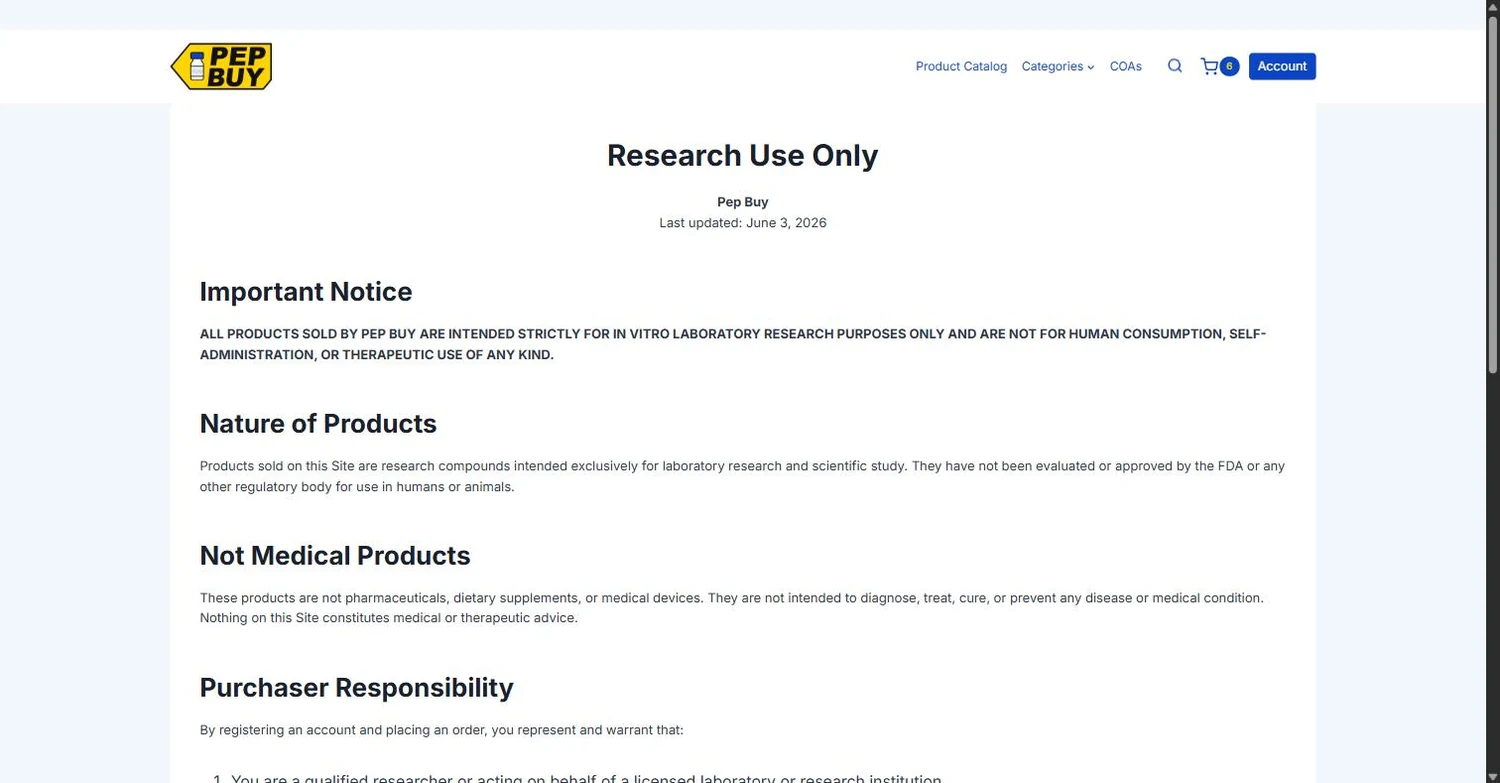
Every visitor meets a research-use and eligibility step before anything else, and the catalog itself sits behind a login. It answers a real requirement and doubles as qualification — the people who get through are the people worth selling to.
Pricing only your customers see
Register, get approved, and the prices appear. To everyone else the catalog is a locked door. That is the whole point of a trade account, and it is why this is a members-only build rather than a shop with a discount code.
Six ways to pay
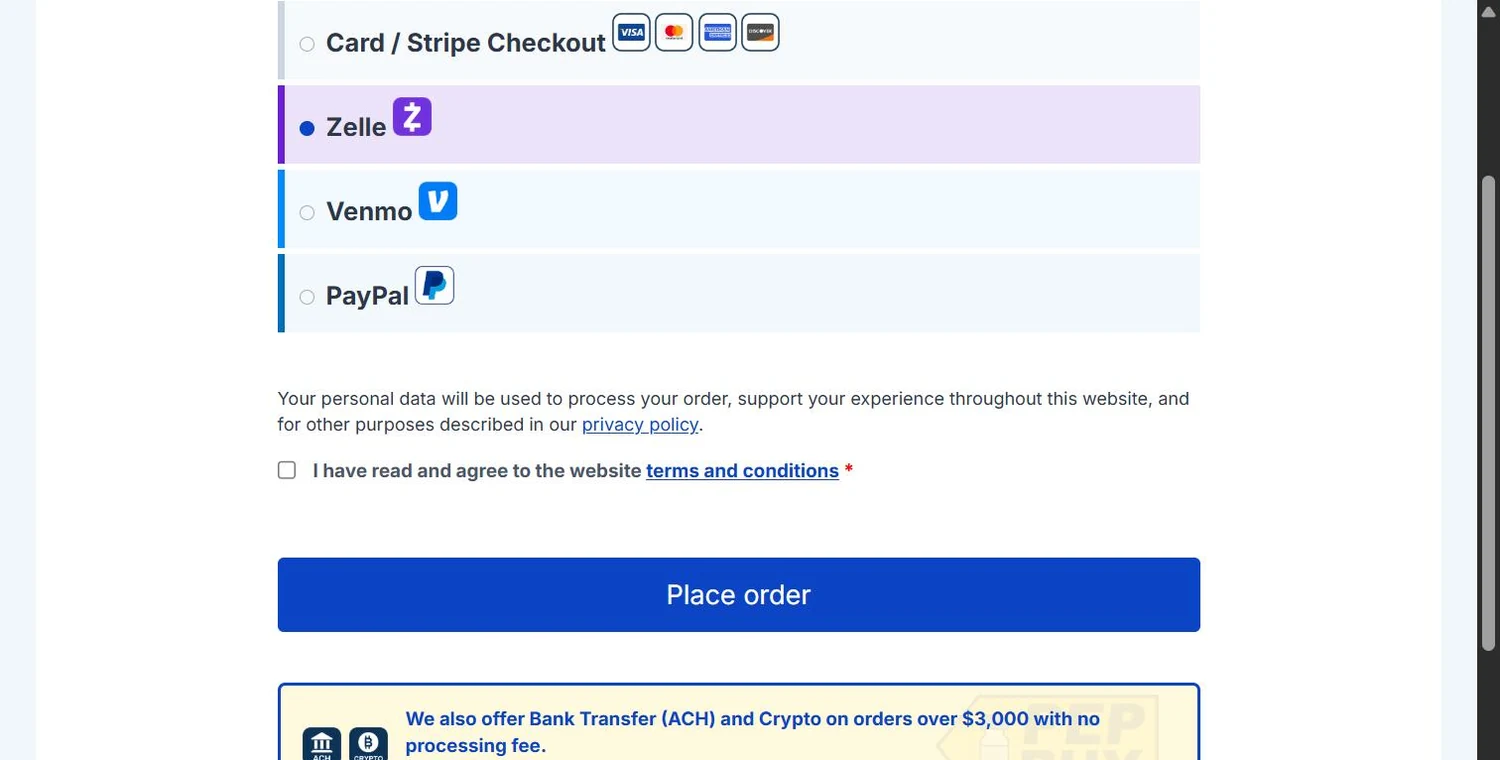
Card through Stripe, Zelle, Venmo, PayPal, and above a threshold, bank transfer or crypto with no processing fee. Most stores have one rail and no plan for the day it stops working. B2B orders are large enough that losing one to a declined card means losing the account.
Fast, because the front page carries nothing spare
100 out of 100 for speed on desktop and 96 on mobile, 96 for accessibility and a perfect 100 for best practices. The public page has one job — explain the offer and get the right people to register.
Third-party verification, published
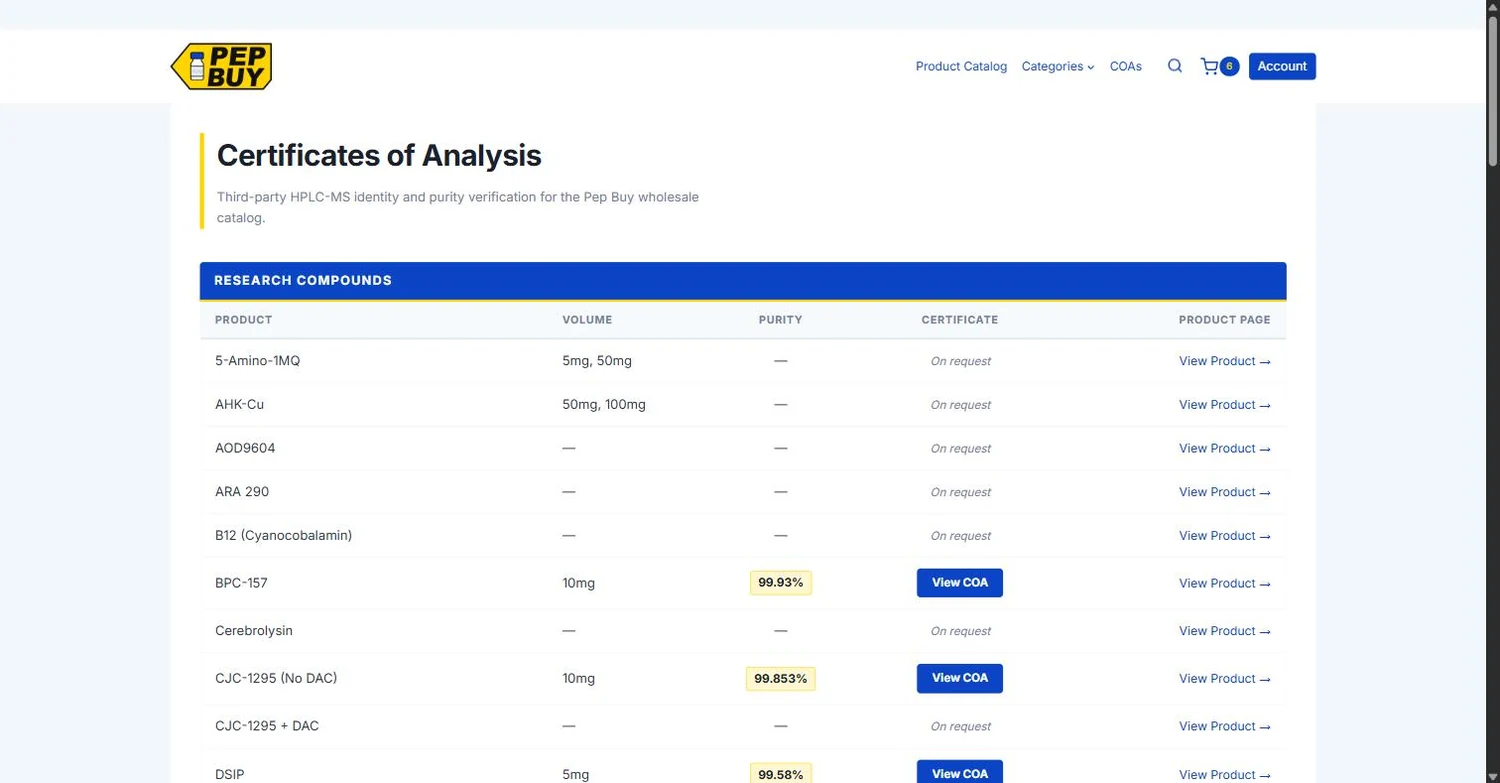
Every compound in the catalog carries its purity result and, where issued, a certificate a buyer can open before ordering. In a trade relationship the proof belongs on the page, not in a follow-up email.
The compliance layer is part of the build
Research-use terms, purchaser attestations at checkout, and a footer that states the position on every page. Built in from the start rather than bolted on afterwards.
Stack
- WordPress
- WooCommerce
- PHP
- Stripe
- Code Snippets
- REST API
- Hostinger
- WebP
Measured performance
Google PageSpeed Insights, 29 August 2026, one run per platform, measured on the public landing page. Search is measured separately — Lighthouse 13, median of five runs per platform, driven past the age check in a real browser session, every run confirmed to land on the storefront rather than the challenge page.
The decisions that mattered
Gating a catalog without gating yourself out of search
Anything placed in front of a site is the first thing a crawler meets, and here that is the intended outcome: a trade catalog has no business being indexed. But the public landing page still has to be found by someone looking for a supplier, which is why the offer, the credentials and the registration path all sit in FRONT of the gate rather than behind it. Deciding what to expose and what to lock is the whole design, and most gated builds never make that decision deliberately.
Six rails, because the failure mode is losing the account
A consumer store that cannot take a payment loses a sale. A wholesale store that cannot take a payment loses a buyer who reorders every month. That asymmetry is the entire argument for the payment stack: card for convenience, Zelle and Venmo and PayPal for buyers who would rather send it directly, and bank transfer or crypto without a processing fee once an order is large enough that the fee starts to matter.
What this means for your business
This transfers to any business selling at trade rather than retail — a supplier with dealer pricing, a distributor with tiered accounts, a manufacturer who quotes rather than lists. You want approved buyers to self-serve at their own price, and everyone else to see nothing but a reason to apply. That is a build rather than a plugin, and underneath it is the same one.
Want a site that does this for you?
Start with a free audit — a written report on how your site performs today and what it would take to put it in this company. No pitch attached.
Get a free audit →