Flow Sub Only
The number one grappling promotion in Maine deserves a website that is as professional as their events. Information and links to future events, historical event data, and rankings that showcase the amazing competitors also headline the site.
A site with one job: turn a visitor into a registration. It also happens to be the clearest speed story in this portfolio — a twelve-second load on a phone, diagnosed to two exact causes and cut by more than half.
We found a 12.1-second mobile paint, traced it to two specific causes, and cut the image weight 96% at the source. If your site is slow and nobody can tell you why, that diagnosis is the job — and it is the part most agencies skip.
The problem
Event details lived scattered across social posts and a booking platform visitors had to be told about separately. There was no single page that answered when, where, what does it cost, how do I sign up. And on a phone the site took twelve seconds to show anything at all.
What changed
Measured on the live site before and after the change. Bars are to scale.
Gallery


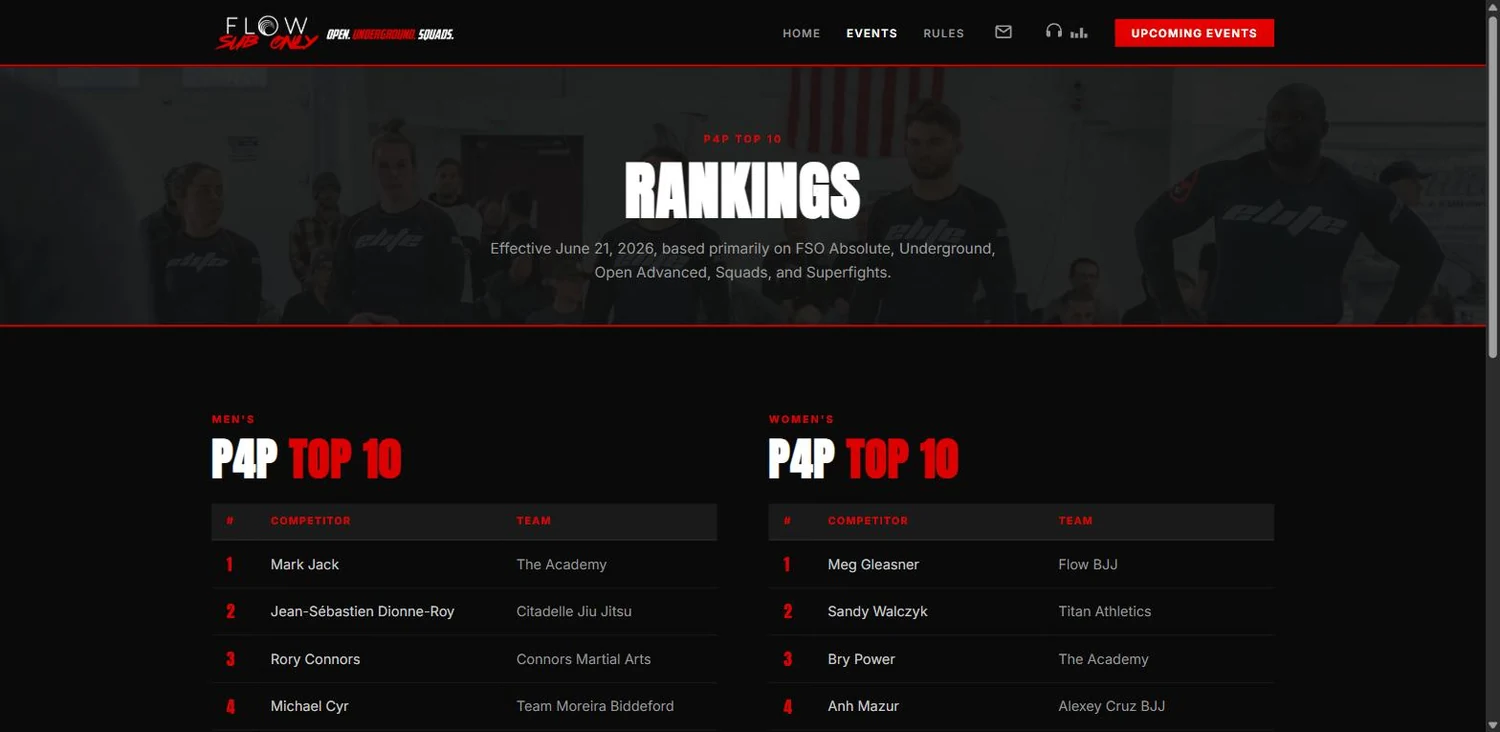
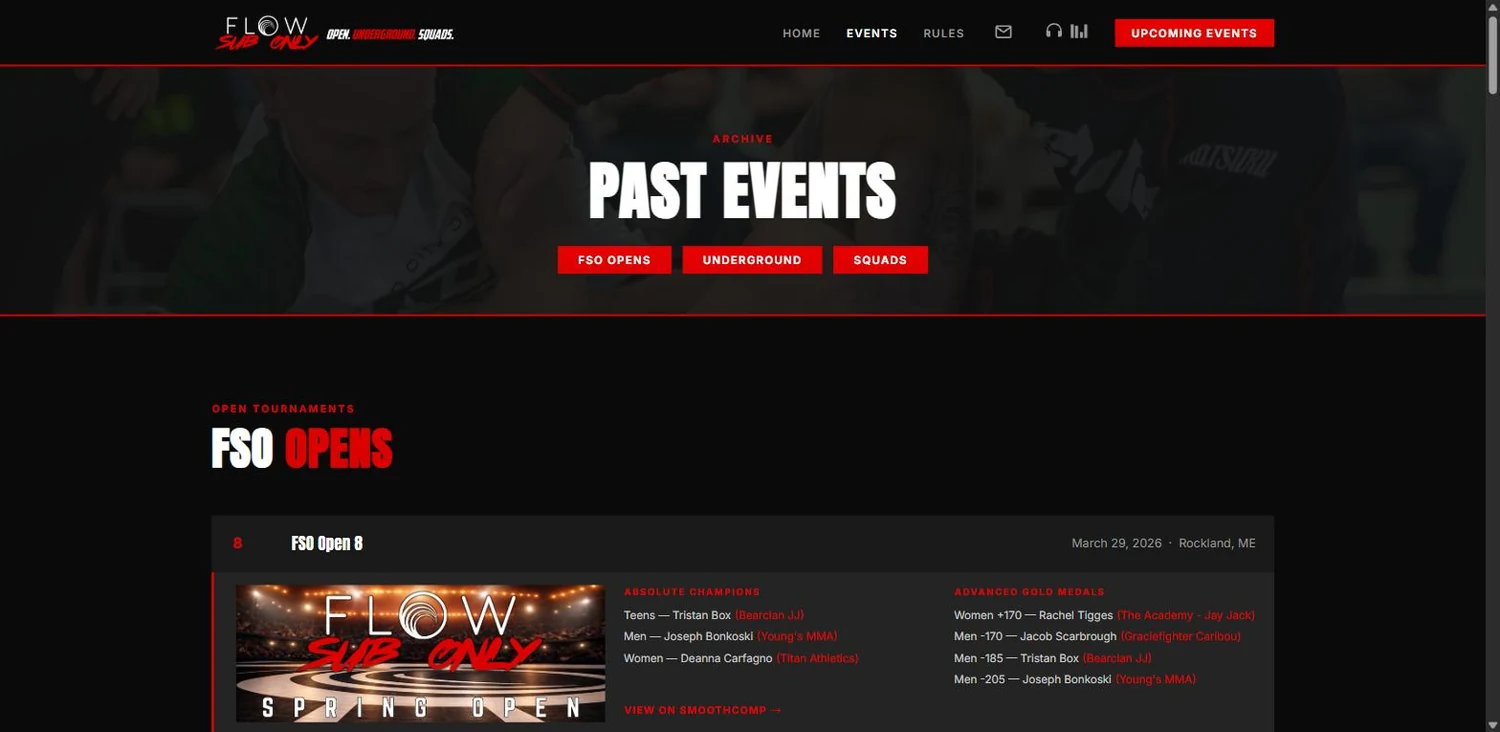
How we built it
A brand with an actual point of view
Heavy condensed type over high-contrast photography, hard edges, no rounded corners, two colours plus white. It is a deliberate, confident look that could not be mistaken for a template — and it is why the site reads as an established operation rather than someone's side project.
One action, nothing competing with it
The next event and the registration button carry the hero. Everything else on the page exists to support that single action. A page that asks for one thing gets it far more often than a page offering five.
The question people check before they commit
The detail people most want to confirm before committing gets its own page in the main navigation. Answering the pre-purchase question on the site instead of in a message thread removes the most common reason someone leaves and does not come back.
Speed treated as a diagnosis, not a guess
Twelve seconds is a symptom. We measured it, found the two specific causes, fixed those, and re-measured. No plugin, no cache tweak, no hoping. The section below sets out exactly what was wrong and what it cost.
Stack
- Hand-authored HTML
- CSS
- Vanilla JS
- Cloudflare Pages
- WebP
- Third-party registration platform
Measured performance
Google PageSpeed Insights, 29 August 2026. Median of five runs, measured at this site's own address. Speed is the desktop figure. Where SEO, accessibility or best practices differ between mobile and desktop, the lower of the two is the one shown.
- Largest contentful paint
- 0.8 s
- First contentful paint
- 0.7 s
- Speed Index
- 1.0 s
- Layout shift on mobile
- 0
The decisions that mattered
Twelve seconds, and the two things causing it
Mobile load measured 12.1 seconds. Two other numbers were already perfect, which pointed at one heavy asset rather than a broken architecture. First cause: every photograph was an untouched camera original, and one page was serving a 17 MB image as a faint background texture. Second, and less obvious: the main image was set in the stylesheet rather than the page, and a browser cannot even ask for it until the stylesheet has downloaded and been applied. It was queued behind everything else on the page.
A 96% cut, and the trap on the way to it
All 30 images converted to modern formats at the size they actually display: 76.7 MB down to 2.8 MB. The main image was promoted so the browser starts fetching it immediately, with a smaller version for phones. The detail that matters: the small-screen rule has to match the stylesheet exactly, or a phone eagerly downloads the desktop image and then downloads the small one too — and the double download leaves you slower than before you started. That trap is why this kind of work is measured before and after rather than declared done.
Speed is revenue, not vanity
A visitor deciding whether to wait is not thinking about your scores. Twelve seconds on a phone in a car park means most people never see the page at all, and you never learn they were there. That is the argument for this work: not a better number in a report, more of the people who were already interested actually arriving.
What this means for your business
Nearly every slow site we look at is slow for the same two reasons this one was — photographs uploaded straight off a camera or phone, and important images the browser is not told to fetch early. Both are invisible from the inside, because your own browser has already cached everything. If you sell tickets, take bookings, run a store or ask anyone to fill in a form, this is the most common money left on the table, and it is fixable in days rather than months.
Want a site that does this for you?
Start with a free audit — a written report on how your site performs today and what it would take to put it in this company. No pitch attached.
Get a free audit →